
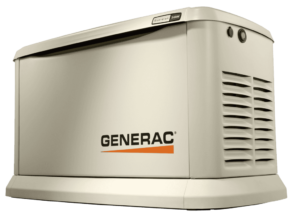
The right generator size for your home comes down to a few important factors: your home’s size, electrical panel size, and whether you need power for your whole home or just the essentials. When choosing a generator, you want to balance your budget with the size that will meet your power needs.
Factors That Impact Size Recommendations
Home Size
The size of your home can affect the generator size that you need. However, if your home uses gas appliances, you may need a smaller generator than a home that runs everything on electricity.
Electrical Panel Size
An electrical panel determines how much power can flow into your home. If your electrical panel has a smaller capacity, then you will need a smaller generator or a panel upgrade to handle a larger generator.
Appliances with High Energy Consumption
Some appliances take more power than others. Common household appliances that require more power include:
- HVAC
- Electric stoves/ovens
- Electric dryers
- Any appliance that requires 240+ Volts
Whole Home Power vs. Just the Essentials
An important consideration is whether you will need power to your whole home or just to a few essential appliances. If you just need power to a few essential appliances, you can save money with a smaller generator.
The Difference Between Running Watts and Starting Watts
Running watts is the power a generator can continuously supply while it is running. Starting watts, on the other hand, is the power it can briefly supply while an appliance is starting up. For example, a central AC system draws high amps at startup and then drops down to a lower amp while running. This is especially important when determining what size generator you need to start and run your HVAC Unit.
Is It Possible to Buy a Generator That’s Too Big?
In terms of use, you generally can’t oversize a generator. In general, having more power means the generator doesn’t have to work as hard to run the full load. However, buying too large a generator may be a waste of money and will increase your fuel use. The goal is to get a generator that can supply enough power without going over your budget.
Buying a Generator for the Whole Home vs. The Essentials
When buying a generator, you want to consider what your goals are. Do you need power running to your whole home or just to a few key circuits?
To power a whole house, you will generally need at least a 20KW generator. The cost will be a little more expensive, but in some cases it may still be the best option.
Depending on the home and the electrical requirements, buying a smaller generator for “essential circuits” can be just as costly as a whole home generator because of load shedding. Load shedding is a safety feature that locks out certain circuits to avoid a power overload.
Essential Circuits to Prioritize
If you don’t need power to your whole house, we recommend you focus on these essential circuits:
- Refrigerators and Freezers
- Gas Furnaces
- AC Units
- Some Lighting
In general, these are the circuits most homeowners want to keep running with a generator during a power outage.

Get a Quote
Unsure which generator is right for your needs? Our team at Seaton Heat N’ Air & Electric can help. Serving Central Arkansas, we help homeowners determine which generators will best serve them during a power outage. In Arkansas, storms and construction work often lead to power outages. Generators can help keep your family confident and comfortable. Call (501) 834-2610 to get started.
Frequently Asked Questions
1. Does square footage alone determine what size generator I need?
No. It has more to do with what appliances are powered by electricity. Homes with gas furnaces, gas water heaters, gas stoves, and gas dryers require a smaller generator than an all-electric house.
2. Can I just buy the biggest generator available to be safe?
We would not recommend the bigger generator available if you don’t need it. We recommend letting us size the generator to your home and your needs.
3. What happens if I install a generator that's too small for my home?
If you install a generator that’s too small, it may not meet city code requirements. Load shedding modules may need to be added to make the installation compliant and safe. The generator may become overloaded and shut down to protect itself.
4. How much extra generator capacity does central AC require?
You generally need a generator between 11 kW and 22 kW minimum to run a central AC system, depending on the size of the unit.
5. Do I need a professional to size my generator, or can I calculate it myself?
It’s best to leave the sizing to a professional to ensure you invest in a generator that meets your needs.
6. How much does a generator cost for the average home in Central Arkansas?
Whole Home Generators are typically between $12,000 and $20,000.